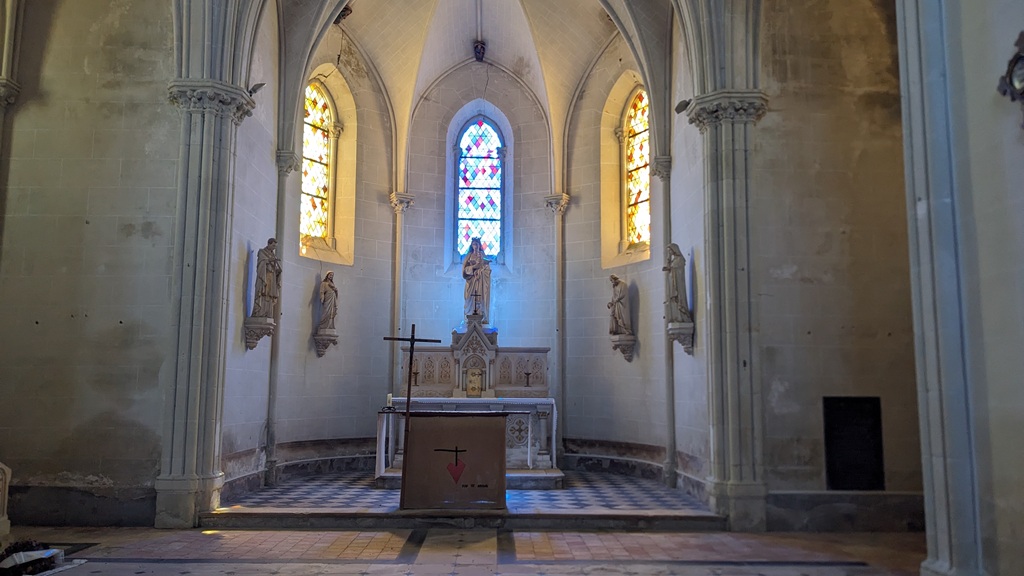
To explore the interior of the chapel and General Cathelineau’s tomb, visit from Wednesday to Sunday, between 2.30 pm and 6.30 pm, from 4 July until 30 August. The summer exhibition on the Wars of the Vendée has been temporarily relocated there; as a result, the tourist office is no longer issuing keys.
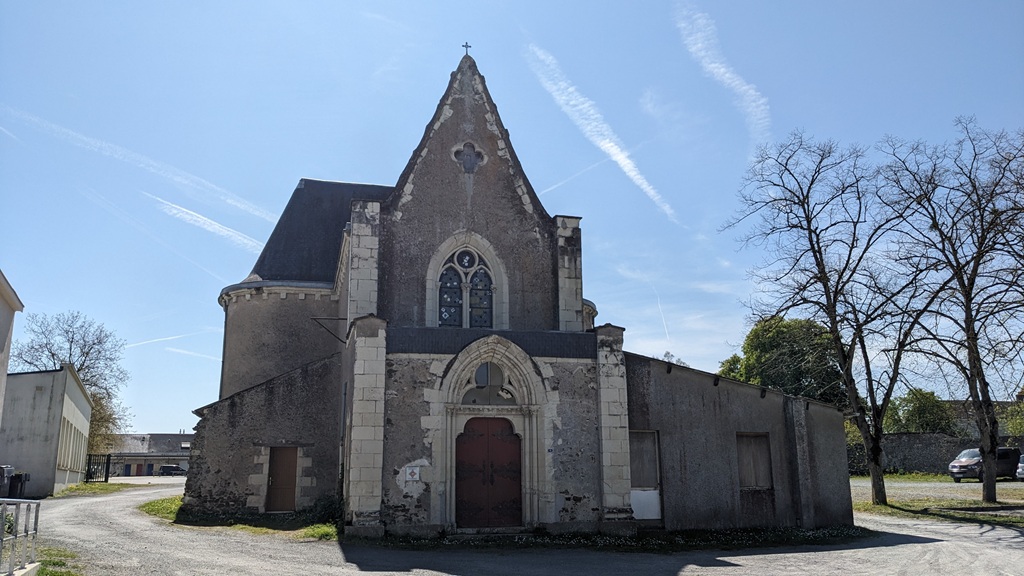
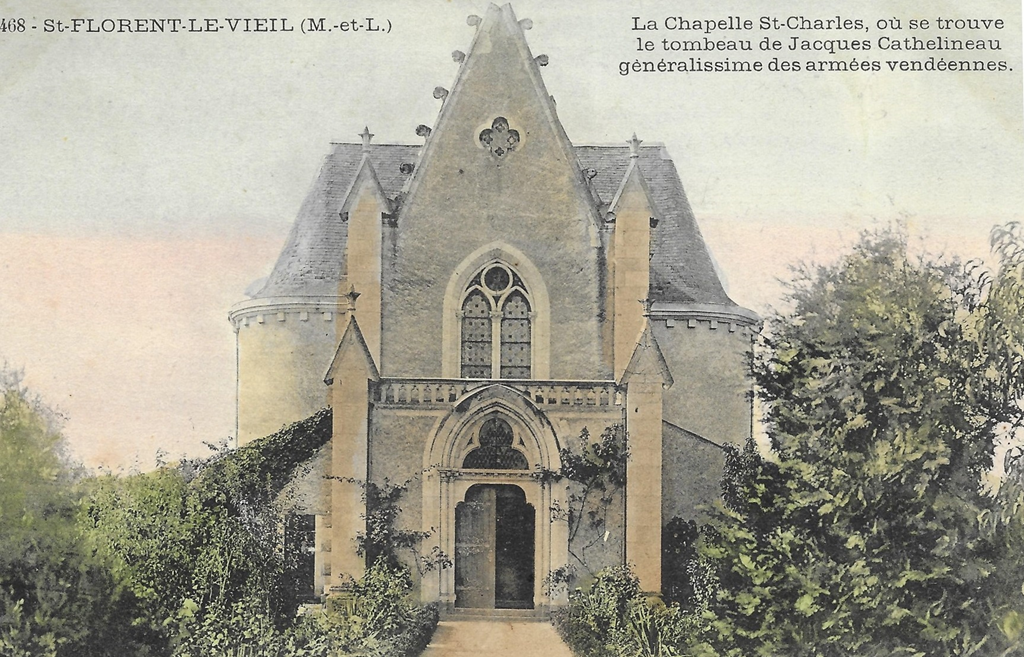
During your visit to the Petite Cité de Caractère® of Saint-Florent-le-Vieil, you simply cannot miss the Saint-Charles Chapel, also known as the Cathelineau Chapel. Listed as a Historic Monument, it stands on the site of the former Cordelières convent.
Against the backdrop of the Wars of the Vendée, in the aftermath of the uprising of 12 March 1793, Jacques Cathelineau, nicknamed ‘the Saint of Anjou’, joined the Vendée Military Movement and took part in the battles in which the Vendée troops captured, notably, Jallais, Chemillé-en-Anjou, Cholet, Vihiers, Chalonnes-sur-Loire, Thouars, etc. His dedication was recognised by other Vendée leaders, who subsequently appointed him as the first generalissimo of the Catholic and Royal Army.
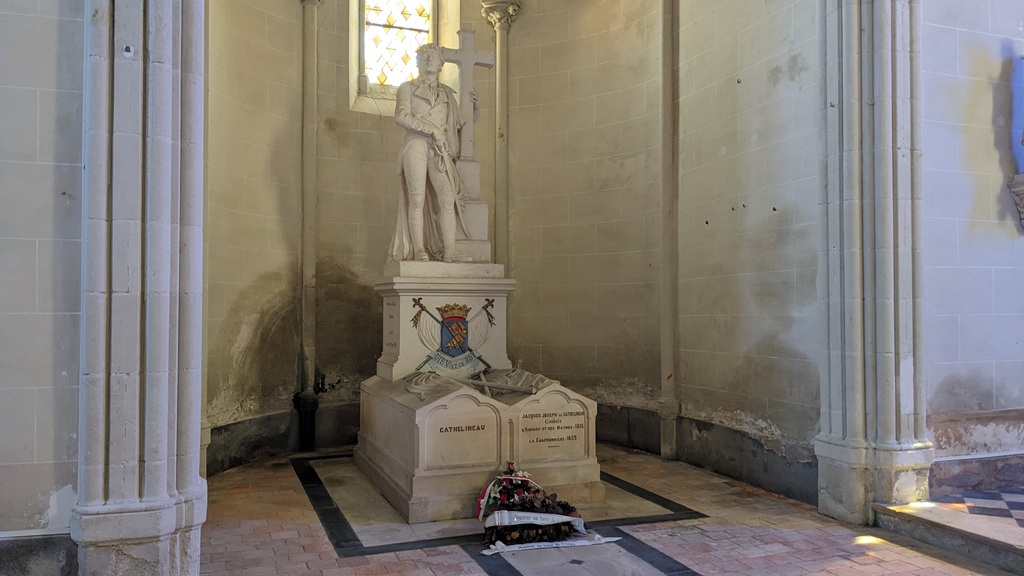
On 29 June 1793, during the attack on Nantes, Jacques Cathelineau was wounded on Place Viarme. He was then transferred to and treated at the military hospital in Saint-Florent-le-Vieil, a former Cordelières convent. It was here that the Vendéen generalissimo succumbed to his wounds on 14 July 1793.
He was initially buried at the foot of the Saint-Sauveur Chapel, in the cemetery of Saint-Florent-le-Vieil. Then, between 1856 and 1858, Count Théodore de Quatrebarbes had the Neo-Plantagenet-style (Angevin Gothic) chapel built in order to transfer part of the remains of Cathelineau and his son, Jacques-Joseph, there. The latter was killed on 27 May 1832 during the Duchess of Berry’s attempted uprising. The remaining remains rest in the Church of Saint-Pavin in Le Pin-en-Mauges, the generalissimo’s birthplace.
In one of the chapel’s transepts stands the general’s tomb, created by the sculptor Molcknecht. He is depicted in a cast plaster statue: standing, Cathelineau leans on a cross, which he encircles with his left arm and which he appears to be defending with a sabre held in his other hand. The Generalissimo’s battles are depicted on three sides of the plinth, along with his coat of arms and the motto “God and the King”.
It is therefore only natural that this chapel is more commonly known as the “Cathelineau Chapel” in honour of the Vendéen general.
| Period (s) | Morning | Afternoon | Opening day | Closing day |
|---|
Individual visits
Free visit (permanence):yesFree visit (request):no
Guided tour (permanence):no
Guided tour (request):
Duration of the visit:
Free tasting:
Tasting fee:
Group tours
Free visit (permanence):yesFree visit (request):no
Guided tour (permanence):yes
Guided tour (request):
Duration of the visit:
Free tasting:
Tasting fee:
Associated services
-
Historic site and monument category
-
Picnic area en
-
Chapel
-
19th century
Join by public transport